Brake System Service for Your Ford
At Banner Ford, we treat your vehicle’s braking system as a core part of its overall safety. Your Ford should stop smoothly and predictably, and that depends on keeping its brake components in good working order. Regular brake maintenance helps make sure your vehicle responds the moment you press the pedal.
Skilled Techs for Ford Brake Maintenance
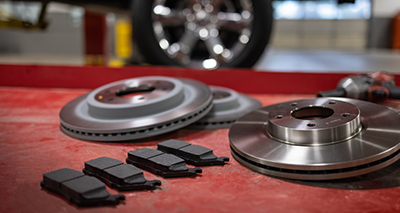
Our Certified Service techs handle Ford brake systems every day, so they know exactly how each part should perform. From routine inspections to more detailed brake repairs, they check pads, rotors, calipers, and other components to confirm everything is functioning the way it should.
Brake Warning Signs You Shouldn’t Ignore
If you hear chirping, squealing, whistling, or grinding—or if your vehicle shakes during braking—those are clear indicators that your brakes need service. Many Ford vehicles are also equipped with Brake Wear Indicators or a Brake Pad Life Monitor that uses sensors on the front and rear pads to measure wear. When those alerts appear, it’s time to visit Banner Ford for a full inspection to confirm that all brake components are functioning correctly.
How often should brakes be inspected or serviced?
A general guideline is to have your brakes checked every six months or 6,000 miles, but actual wear depends heavily on your driving conditions. Frequent stop-and-go traffic, hilly terrain, and certain driving habits can all cause brake components to wear sooner. If you hear noises like squealing or grinding, or if you feel pedal vibration, schedule service immediately rather than waiting for your mileage interval.
FAQs
Which brake parts wear out over time?
Brake pads, brake rotors, brake calipers, brake shoes, and brake hoses will all need replacement at various points throughout the life of your vehicle. These parts naturally wear as part of normal brake operation and should be addressed as recommended by your technician during brake service.
When I schedule full brake service, what does that include?
A complete brake job means our service techs go through the entire system, checking every component involved in slowing the car down. That includes pads, rotors, calipers, lines, hoses, and brake fluid. Any worn or damaged parts get replaced, and everything else gets inspected, cleaned, and serviced so the system works as it should.
Do brake rotors always need to be replaced with new brake pads?
Not necessarily. If you’re not experiencing pedal pulsation or steering wheel vibration under braking, and the rotor still measures at least 1 mm above its discard thickness, the rotor may not require resurfacing or replacement. Our techs will confirm whether the rotor meets Ford specifications.
Is it risky to keep driving with rotors that are in bad shape?
Yes. Once a rotor is worn down, it stops working efficiently with the brake pads. That means the car needs more distance to stop, and the brakes won’t feel as steady or predictable. As the rotors continue to deteriorate, the braking system is less effective, and it becomes harder to maintain control during sudden stops.